EAM Jaishankar backs the US-led FORGE initiative to break China's rare earth monopoly. Inside the new "Price Floor" mechanism and India's Rare Earth Corridors.
 Brajesh Mishra
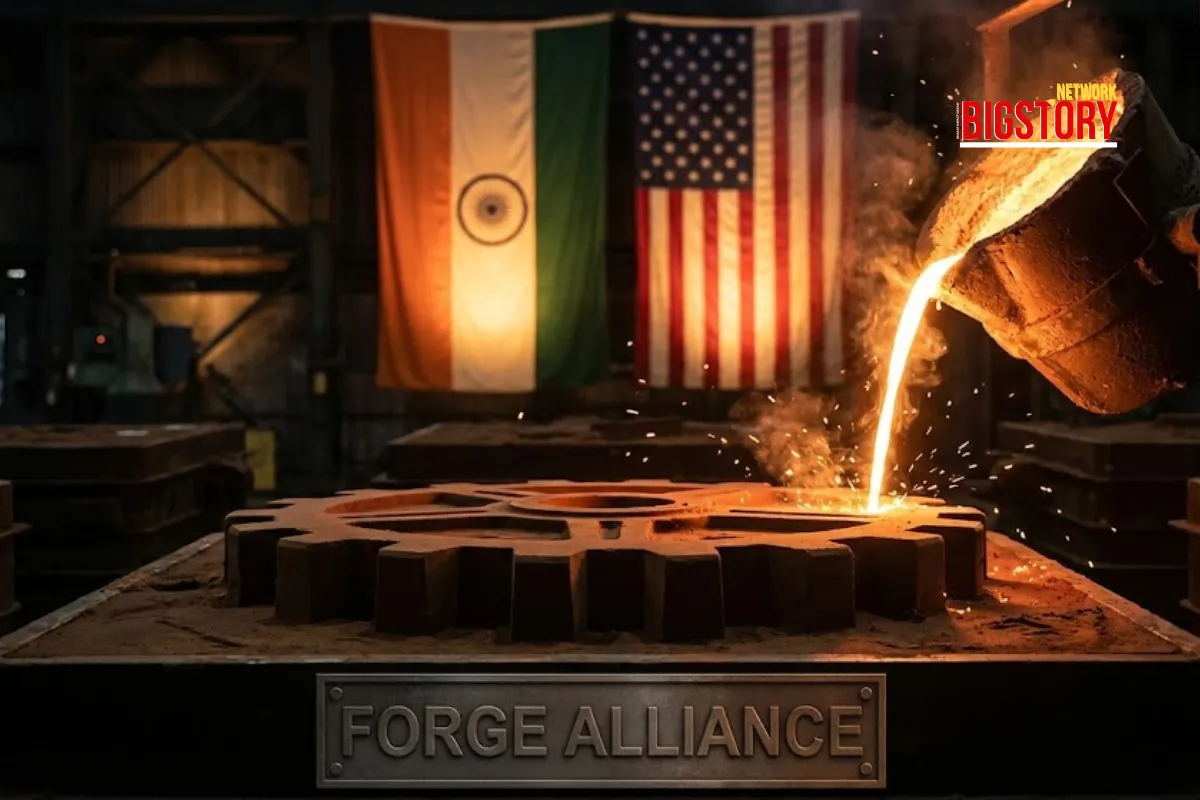
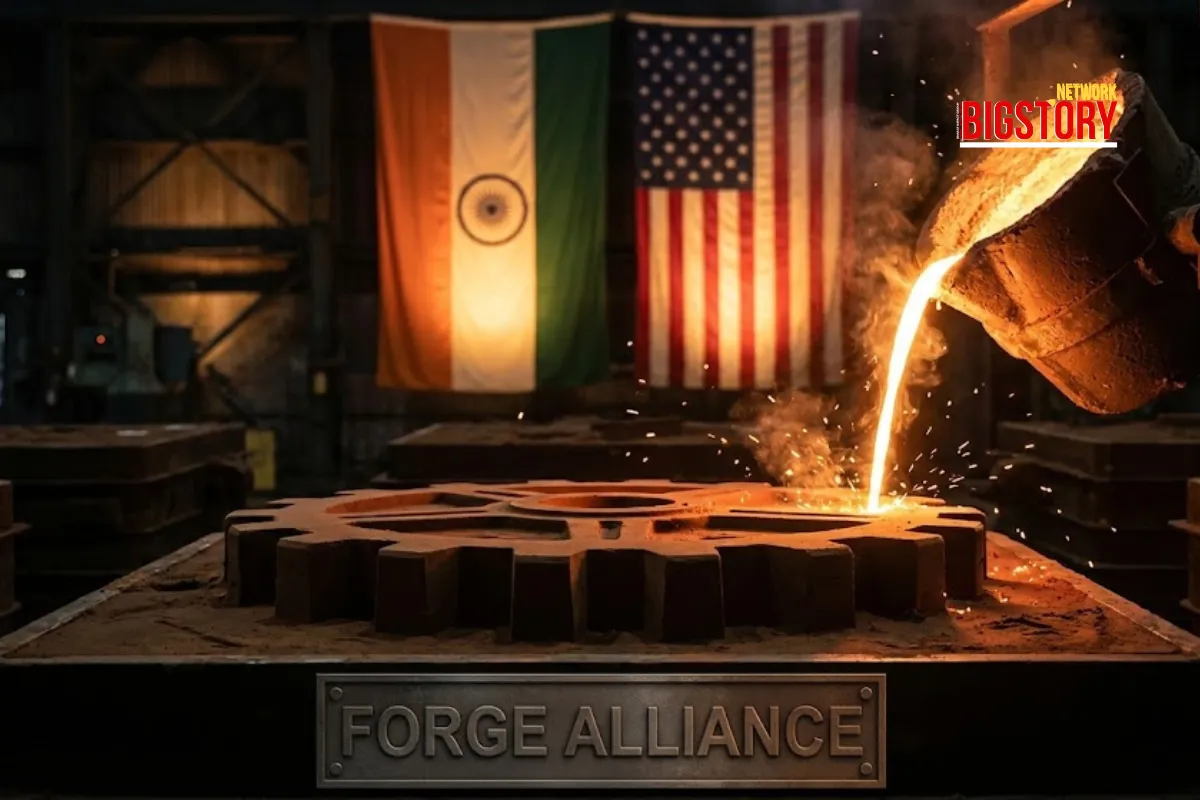
In a decisive follow-up to this week’s blockbuster trade deal, External Affairs Minister S. Jaishankar today formalized India's entry into the FORGE (Forum on Resource Geostrategic Engagement) initiative during a high-stakes ministerial in Washington D.C. Hosted by the Trump administration, the 54-nation summit represents the most aggressive attempt yet to dismantle China’s 90% monopoly on critical mineral processing.
FORGE succeeds the previous Minerals Security Partnership (MSP), shifting from a loose dialogue to a "Managed Strategic Trade" bloc. At the heart of this new alliance is a radical "Economic NATO" concept: a preferential trade zone where member nations agree to enforceable "Price Floors." By ensuring that critical minerals like Lithium, Cobalt, and Neodymium are never sold below a sustainable reference price, the U.S. and India aim to shield allied miners from the predatory "dumping" tactics Beijing has historically used to bankrupt Western competitors.
S. Jaishankar (External Affairs Minister): The Strategist. He highlighted India's National Critical Minerals Mission, positioning India as the world’s "trusted processing hub" to de-risk supply chains from excessive Chinese concentration.
JD Vance (U.S. Vice President): The Architect. He pitched the "preferential trade zone," arguing that "modern economies run on real things" and that price floors are essential to protect the long-cycle investments required for mining.
Marco Rubio (U.S. Secretary of State): The Convener. Rubio explicitly linked the initiative to National Defense and AI, stating that allies must pool collective talent to ensure supply chains are "immune to political coercion."
While the media frames this as a simple "Anti-China" bloc, the real story is the Death of Free Market Mining. The "Price Floor" mechanism proposed by Vance is effectively a Reverse Cartel. Traditionally, cartels like OPEC fix high prices to maximize profit; FORGE fixes minimum prices to prevent "Pricing Whiplash."
By creating a "Pricing Shield," the U.S. is guaranteeing that Indian PSUs like IREL and NMDC can invest billions in the Odisha and Kerala corridors without fear that China will suddenly crash the market price to make their projects unviable. India has traded "cheap Chinese inputs" for "guaranteed American demand," effectively nationalizing its mineral security under a U.S. financial umbrella.
If the global market for essential minerals moves from "Free Trade" to "Managed Strategic Alliances," is India gaining a trade shield, or is it permanently tethered to U.S. industrial policy?
What is the FORGE initiative launched in 2026? The Forum on Resource Geostrategic Engagement (FORGE) is a U.S.-led 54-nation alliance designed to secure critical mineral supply chains and act as a successor to the Minerals Security Partnership (MSP).
How does the "Price Floor" mechanism work for minerals? Allies in the "preferential trade zone" agree to reference prices at each stage of production. These floors are maintained through adjustable tariffs to prevent China from undercutting market prices.
Which Indian states are part of the Rare Earth Corridors? Odisha, Kerala, Andhra Pradesh, and Tamil Nadu have been designated as the primary states for these corridors, focusing on extraction, refining, and magnet manufacturing.
What is Project Vault? Project Vault is a $12 billion U.S. strategic reserve initiative, backed by a $10 billion EXIM Bank loan, to stockpile critical minerals and fund allied mining projects.
How does FORGE impact China's rare earth monopoly? The initiative aims to reduce China’s processing dominance from 90% to below 50% by 2035 by funding and protecting diverse production centers in allied nations like India.
News Coverage
Context & Analysis
 Exclusive Content


Sign up for the Daily newsletter to get your biggest stories, handpicked for you each day.

 Trending Now! in last 24hrs